Showing posts with label margarine. Show all posts

7.30.2010

Butter vs. Margarine: The Results!


I have gotten so many e-mails and comments about this, so I must say I’m a little nervous to report these results! I mean, they’re not bad or anything, but it’s not quite as exciting as we were all hoping… If you missed the introduction to this experiment, go HERE to read about it.


Above: Left = Butter; Right = Margarine; Notice how the butter melted MUCH more quickly than the margarine... read my comments on this at the end of the post.


I began with the butter and margarine in the back yard. Mostly because I wanted to prevent the neighbors from thinking I’m crazy. There was little activity all morning, and since it was in the 90s that day, the butter and margarine started melting around noon. I figured this was okay – melted butter and margarine are still edible. In the early afternoon, I spotted this guy checking out the margarine. I had to photograph him through our back screen door, so I apologize for the fuzziness.


I’m guessing there were more squirrels involved in the feast, because when I went outside later that day to check on the plates, they were not quite as full.


I decided to leave them there overnight because there was still plenty left on the plates. This was probably a mistake, because around 5:00 am the sprinklers came on. Luckily oil and water don’t mix, so I didn’t lose any butter or margarine – I just had soggy plates. The butter/margarine was hardened on the bottom, and the water had pooled on top. That morning I drained the water off the top of the plates. A few hours later, there were ants all over the “butter water” on the sidewalk, but not much going on with the “margarine water”.





Late morning, the margarine plate looked like this...


...and the butter looked like this:


There was definitely less butter than margarine! I decided to move the plates to the front yard to see what happened. I caught this guy eating the butter – I took this photo through the living room window and he saw me and ran away, but this is just seconds after he was eating the butter:


I was gone most of this day, but when I returned late that afternoon I noticed a lot of insects in the butter and not much going on with the margarine:


Above: Margarine


Above: Butter


This guy must have been here for a while, because he eventually just got himself stuck as the butter started to harden towards the end of the day!
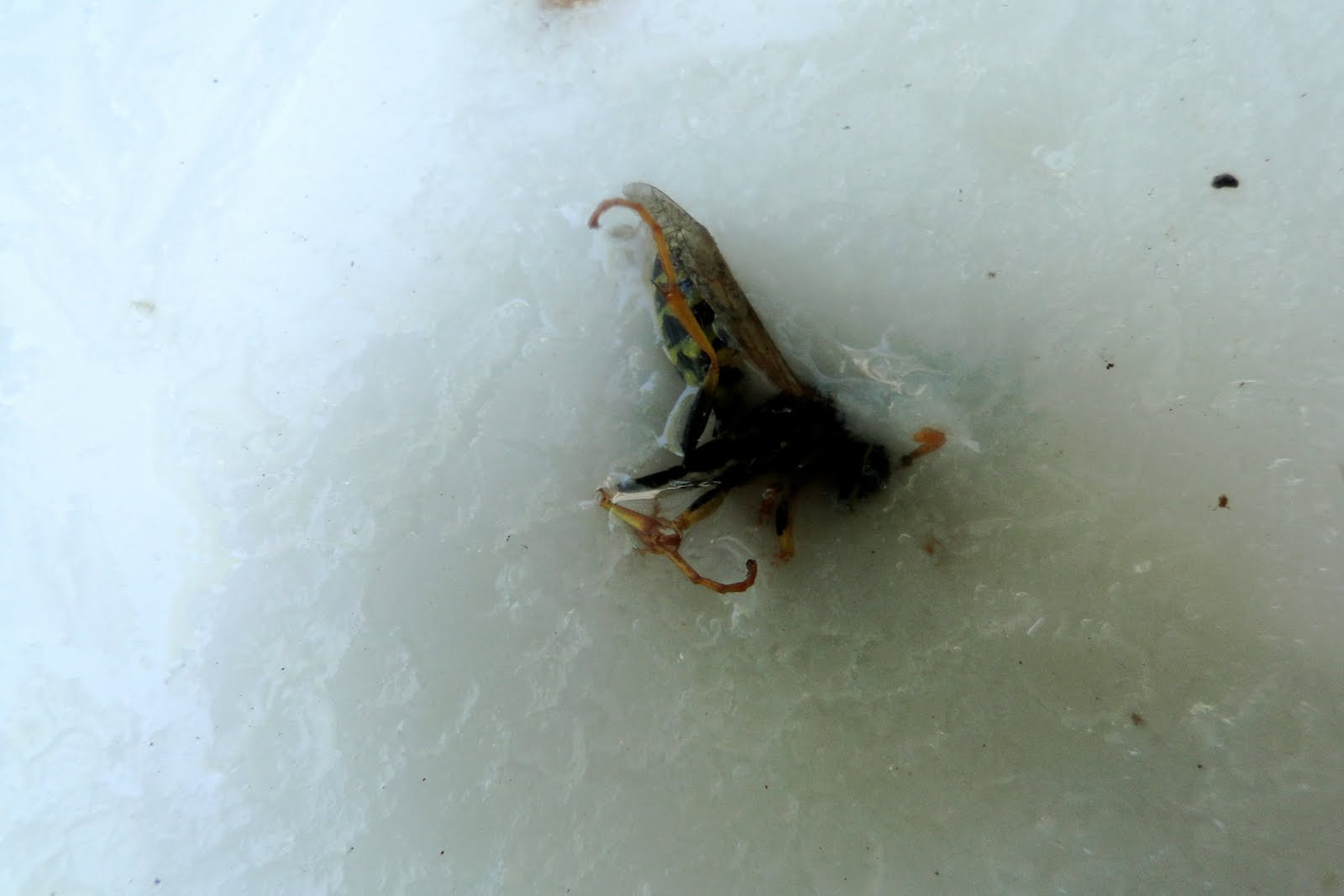


Finally, by the end of the second day, the butter was almost fully eaten and the margarine was only about half eaten. There were lots of insects stuck to the butter plate in various places, but only a few leaves and maybe one or two insects on the margarine plate.


Here’s what I learned from this experiment:

  • Margarine is dark yellow when it melts, whereas butter is more of a pale yellow. This must have something to do with the preservatives and “fake” ingredients in the margarine being more difficult to break down.

  • The animals tried both snacks, but the butter definitely got eaten more quickly. The margarine ingredients (listed HERE) included salt and buttermilk (among many other things), so there are still some “real” ingredients that tasted good to the animals.

  • The margarine melted much more slowly than the butter (see photos at beginning of this post). This must be because of all of the fake ingredients that are added into the margarine.

  • I’m really glad I used paper plates, or I would have had melted oil all over my sidewalk!


You can't really tell from the photo above, but the margarine was thick and most of it was leftover, whereas the butter plate only held a thin layer. I think I need to try this again in the fall, when it’s much cooler outside and the sticks of butter and margarine won’t melt. This will be a more accurate experiment, because I can do a better comparison of what’s leftover at the end of the day. SO, maybe I’ll try it again in few months – after all, I still have another stick of margarine in my fridge, and I won’t be using it for anything else!


7.26.2010

Butter vs. Margarine Experiment


Remember when I talked about the difference between butter and margarine (here) and why butter is so much better for you? It’s healthier, it’s made from whole foods, and I don’t think anyone will argue with the fact that it tastes MUCH better.


Well, I’ve been wanting to conduct an experiment. I heard once that if you put a stick of butter and a stick of margarine outside, the animals and bugs will eat up the butter but basically ignore the margarine. The idea is to prove that even those critters will choose butter over margarine, because it’s a real, whole food. To them, the highly processed margarine is not even a food, so they will avoid it.


So, today is the day! I have no idea what the outcome will be, but hopefully my hypothesis is correct. I guess we’ll just have to wait and see. I bought Land-O-Lakes Pure & Creamy Margarine, and Organic Valley Pasture Butter (those lucky squirrels!). The ingredients in each of these are below:


Margarine: liquid soybean oil, partially hydrogenated soybean oil, water, buttermilk, salt, soy lecithin, sodium benzoate, vegetable mono and diglycerides, artificial flavor, vitamin A palmitate, colored with beta carotene


Butter: organic pasteurized sweet cream, salt, microbial cultures


I labeled 2 paper plates and placed the butter and margarine in the middle of the yard. I decided it was only fair if they were next to one another, so the animals could explore both options and make a choice. I may move these plates to the sidewalk later today to give the insects better access.


Stay tuned this week to see what happens! I have no clue if this will take one day or all week, but I’ll keep you updated. Also, it’s supposed to be in the 90s today in Denver, so that could make things interesting as well – the animals may be drinking their butter and margarine!


(My neighbors definitely think I’m crazy…)


2.26.2010

Hydrogenation

We are still studying fats in my Nutrients class, and yesterday the assignment was to create a client handout on something related to fat. When we make client handouts, the purpose is to give clear, solid information on a topic that is relevant to a client’s health. I chose hydrogenation. There is so much information out there about hydrogenated oils, partially-hydrogenated oils, foods containing these oils… many people don’t know what to make of it all.

How Does It Work?

Hydrogenation is the most common method used for altering natural oils. It is also extremely harmful to our health. During hydrogenation, unsaturated and essential fatty acids are altered using high temperatures, high pressure, hydrogen gas, and a metal catalyst. The metal catalyst is usually nickel. However, it can be called nickel as long as it is 50.1% nickel, and this is usually the case – the other half is aluminum. The aluminum remains in the final product, and is therefore eaten by the consumer. Aluminum is linked to Alzheimer’s disease, osteoporosis and even cancer.

So What is Partial Hydrogenation?

Partial hydrogenation is simply hydrogenation that is not fully completed. This keeps the oil at a consistency that is still useable in many products. However, partial hydrogenation also changes anywhere from 10% to 55% of the oils original fats into harmful trans fatty acids and other unnatural fatty acids. Full hydrogenation produces only saturated fatty acids, but is difficult to use in products because of its harder, waxy consistency.

The chemical changes made during partial hydrogenation alter fat molecules to the point where they are interfering with normal biochemical processes inside our bodies. Trans fats increase LDL cholesterol, decrease HDL cholesterol, interfere with liver detoxification, and inhibit proper function of essential fatty acids (which leads to obesity and other disease). All essential fatty acids (omega-3s and omega-6s), which are vital for health, are destroyed during hydrogenation.

Partially hydrogenated oils are found in products such as margarine, shortenings, shortening oils, certain vegetable oils, some salad dressings, fried foods, candies, and bakery products.


Why Is Hydrogenation Used?

Hydrogenated oils will not spoil, so shelf life is increased. The process of altering the oils makes them usable in a wider variety of products. Also, the hydrogenation process is inexpensive and products made with hydrogenated oils have extremely high profit margins.

A classmate mentioned last night that margarine, which is made from hydrogenated oils, is one molecule away from being plastic. And, rumor has it that if you leave a stick of margarine and a stick of butter outside, over time the butter will get completely eaten by bugs and squirrels and birds, but the margarine will be left untouched. What animals and insects want to eat plastic?? I can assure you I will be performing this experiment as soon as it gets warmer outside, so stay tuned!


What Does It Mean For Health?

During the hydrogenation process, the following items are removed from oils:

  • All protein
  • All fiber
  • 95-99% of all minerals
  • 65-100% of all vitamins
  • Almost all lecithin and phytosterols (both very beneficial nutrients)
  • All or some essential fatty acids

In addition, toxic substances are added into the oils so they are in optimal form for being inserted into food products. Trans-fatty acids and hydrogenated oils are foreign to our bodies. Because of this, they completely throw off balance and lead to the following health issues:

  • Obesity
  • Cancer
  • Damage to cell membranes
  • Harmful to the heart’s proper functioning
  • Impair energy flow and production
  • Interfere with pregnancy
  • Can cause low birth weight and other birth issues
  • Decreases insulin response (precursor to diabetes)
  • Other major diseases and health issues

What You Can Do

The best thing you can do is to completely avoid anything containing hydrogenated oils (partial or otherwise). Labeling can be unclear – depending on the degree of hydrogenation, the food company may or may not be legally required to label it “partially” hydrogenated. So, whether the label says “hydrogenated,” “partially hydrogenated,” or even “shortening,” just avoid it altogether. And when you see things advertised as “zero trans fats,” be careful. If the product has less than 0.5 grams of trans fats, they can claim to have 0 trans fats. So they may still contain trans fats, and if it is something you eat on a regular basis, that adds up.

Buy butter, not margarine or any other buttery spreads, as we talked about here. Of all the options out there, real butter is the only 100% whole food. And you know how I feel about eating only whole foods!

And, perhaps most importantly, educate yourself on fats. Essential fats are so vital to our health and without them, our bodies will eventually fail us. Too many of us are terrified of fats, leading us to consume only products labeled “low-fat” or “fat-free”. But if you do your homework, you will realize how harmful these products really are. So, go enjoy your butter (buy raw – it’s much better!) and remember that fats do not make us fat, as long as you’re eating the right kinds!


11.24.2009

Butter: Keeping it Real

Wow, guest blogger Jessica's post on bees and raw honey yesterday was a hit! Thanks again Jessica! And based on the response, we all hope you come back soon! If you missed it, be sure to read it here.

And now on to butter...

Before you begin your two-day campout in the kitchen to prepare the Thanksgiving feast, you may want to hear what I have to say about butter. And believe me, you will like what you hear.

Butter is a health food! Yes, you heard me correctly. A health food. Butter contains large amounts of vitamin A (more than carrots!) as well as vitamins E, K and D. It is also rich in trace minerals such as selenium (a powerful antioxidant) and iodine. And as we all know, butter has fats. Some of these fats are short- and medium-chain fatty acids that remain fairly stable when heated, so are safe to use when cooking or baking. Fats in butter are used as energy for our heart, brain and digestive tract; act as anti-carcinogens (reduce occurrence of severity of cancer cells in our bodies); to stimulate immune systems and act as antimicrobials; and protect against gastrointestinal infections (especially in children and the elderly, which is one reason kids should drink whole milk).

Some people buy margarine thinking they are doing themselves a favor by reducing fat and calories. Margarine was originally used in the mid-1800s as an affordable way to feed the lower class. Margarine, the supposedly “heart-healthy” choice, is made from vegetable oils (mainly soy and cottonseed) using high heat and high pressure. Heating leads to destruction of basic nutrients in foods. Nickel, a toxic heavy metal, is added to solidify the margarine. Colorings and deodorants are added to change the final product from gray to yellow and to eliminate the rancid smell that comes with heating vegetable oils. Margarine is hydrogenated, which produces harmful trans-fatty acids. The polyunsaturated fats in margarine are more susceptible to oxidation and high levels of free radicals, and due to their chemical composition are more likely than the fats in real butter to be stored as body fat.


Many people forget that butter is a natural, whole food. We are repeatedly encouraged to stay away from processed foods, and this includes margarine. Some of you may use other buttery spreads, like Smart Balance. These tend to be a mix of different processed oils, and while they may contain fewer fats than butter, they are definitely not a natural, whole food. The hardened state of buttery spreads is indicative of the amount of processing needed to make a mixture of oils turn into a tub of spread. Many of them claim to use flaxseed oil, but fail to mention that the processing of the oil kills off its omega-3s. Many of us are deficient in omega-3s because of these processing methods. The high levels of omega-6s in buttery spreads (without omega-3s to complement them) can cause inflammation in our bodies.

When buying butter, try to choose raw butter from grass-fed cows as it is closest to its original form and contains the enzymes and healthy bacteria that would otherwise be killed off during pasteurization. Raw butter from grass-fed cows will be bright yellow or orangey in color, due to the beta-carotene from the grass. Note that not all butters labeled “organic” are raw or from grass-fed cows. If raw butter is unavailable to you, some good grass-fed cow brands to try are KerryGold (sold at Trader Joe’s!) or Organic Valley Limited Edition Pasture Butter. And if you cannot find butter that is raw and/or from grass-fed cows, organic butter is a good third choice.


So go ahead, throw some real butter into those pumpkin apple pies! They’ll taste better and you’ll be doing everyone at your dinner table a favor!

Tomorrow I will talk about milk. Like butter, milk contains the most nutrients when consumed raw. I’ll explain why, and also provide some alternatives if raw milk is not readily available to you.