9.24.2010

Kids & Adults: Different Diets


I am starting two new books for school – Feeding Your Child for Lifelong Health, by Susan B. Roberts and Melvin B. Heyman, and Superimmunity for Kids, by Leo Galland. So, over the next week or so I may be sharing some of the information I learn. I know a lot of PWN readers have kids or plan on having kids, so hopefully you will find the information valuable.


I am just getting started, but one of the things I read this morning is something that I think is important to share. While it may seem obvious, many parents may forget that children have very different nutritional needs than adults. Many adults try to eat a diet that is very high in fiber, low in fats, and doesn’t include things like oils, butter or red meat. While this may be the proper diet for mom or dad, it is not the proper diet for a child. If your toddler or child is not getting enough fats, calories and other nutrients, they can develop developmental problems and even start to crave the foods their body needs. Kids should be eating full fat dairy products (if you decide to give them dairy and they do not have an allergy), and they have no business using things like fat-free salad dressings or avoiding butter.


Many times I have mentioned the importance of feeding your family ONE meal at night. Kids and parents can enjoy the same foods, with some adjustments as necessary (certain spices, for example, can be too strong for young kids). However, if the parents are on a restricted diet, they need to make sure their children are obtaining enough fats and calories from their meals.


According to Feeding Your Child for Lifelong Health, there are 8 key nutrients that parents should focus on when it comes to giving their children the best start in life. These nutrients have the biggest impact on metabolic programming, which includes brain development, motor development and even personality. The 8 key nutrients are as follows:


  1. Fat
  2. Fiber
  3. Calories
  4. Iron
  5. Calcium
  6. Zinc
  7. Folate and other B-vitamins
  8. Antioxidants: Vitamins A, C and E

I would add water to this list as well. Kids drink so much sugary juice and not enough water, in my opinion. All of the above nutrients are abundant in fresh, whole foods. Therefore, a whole foods diet is just as important for your kids as it is for you! Don’t waste their appetites on junky prepackaged foods that may fill them up, but will only provide them with trace amounts of the above key nutrients. Start them out on the right track, and that way they will develop a palate for healthy, fresh foods. This will benefit them throughout their entire life! And if you’re trying to change some bad habits at a young age, that’s okay too – better to start now than just avoid it altogether. Make adjustments slowly and include them in the process to make it more fun.


Have a great weekend!


9.23.2010

Leaky Gut: 6 Main Causes


Yesterday I wrote about leaky gut syndrome, and gave a brief overview of some of the symptoms associated with it and some of the more serious diseases that can occur as a result of leaky gut. Today, I’d like to give you the 6 main causes of leaky gut, as laid out in the book Digestive Wellness by Elizabeth Lipski, Ph.D., CCN.


Diet and Nutrition


I’ll start with diet, because I think it’s the most significant. Not only can poor food choices lead to leaky gut, but proper food choices can actually heal leaky gut. For this reason, leaky gut seems to have anything and everything to do with what we eat. Simply put, eating too many bad foods and not enough whole foods leads to an imbalance of bacteria in our intestinal tract. Processed foods are lower in fiber (even if they say they are high in fiber, such as Fiber One pop tarts, don’t be fooled – they are fortified and this type of fiber is not easily absorbed by our natural bodies), and low-fiber diets lead to increased transit time for food passing through our digestive tract. The longer food stays inside of us, the more opportunity it has to begin to spoil and rot, which causes further damage to our intestines. Processed foods also promote inflammation, which can seriously damage the digestive tract over time.


Chronic Stress


When we are stressed for long periods of time, our immunity is affected. Over time, our body begins to react to stressors by producing less and less of two things: sIgA (one of the first lines of immune defense) and DHEA (an anti-aging and anti-stress hormone). Therefore, chronic stress actually leads to an impaired ability to deal with stress and increased susceptibility to sickness and aging (yikes!). The other thing that our body does when we experience chronic stress is to slow down digestion by reducing blood flow to digestive organs. Again, when our digestion slows, food has more time to go bad inside of us and eat away at our healthy intestinal lining.


Dysbiosis


Dysbiosis refers to an imbalance of bacteria within the digestive tract. When “bad” bacteria is allowed to overgrow (as a result of poor diet, antibiotics, steroid medications, birth control pills, or other factors), it breaks down the strong walls of our intestines and causes severe gastrointestinal symptoms. One good way to fight dysbiosis is to take a probiotic supplement daily.


Environmental Contaminants


Every day, we are exposed to many household and environmental chemicals that put stress on our immune systems. Sometimes environmental contaminants can deplete us of important minerals, and can lead to tissue breakdown or inflammation. The best way to deal with this is to limit exposure to environmental contaminants as much as possible. Obviously it is impossible to avoid them completely, but we can do things like use gentler cleaning products and beauty products.


Overconsumption of Alcohol


I’ve talked plenty about alcohol, but just a quick reminder that alcoholic drinks contain very few nutrients but take many nutrients to metabolize. Alcohol strains the liver and damages the intestinal tract.


Use of Medications


Certain medications can damage different parts of our digestive tract. Some damage the delicate intestinal lining, which then allows microbes, partially digested food, and toxins to enter the bloodstream. This leads to much of the discomfot associated with leaky gut syndrome, and eventually more serious diseases. Since sometimes we must take medications for whatever reason, it is even more critical that we focus on a healthy, whole-foods diet so we can counter some of the effects the meds have on our body.


I hope this increases your awareness of leaky gut and the many different factors that can go into digestive distress. Try to become more in tune with your body and pay attention to certain things that may trigger specific symptoms. It is probably impossible to eliminate all digestive issues, but the more we can focus on healthy diet, exercise, sleep, and happiness, the better we will feel and the more productive we will be.


9.22.2010

Leaky Gut


“Leaky gut” is used to describe an array of digestive disorders and symptoms that are associated with increased intestinal permeability. I think it’s important for people to understand how to recognize the signs and symptoms of leaky gut, because the earlier these symptoms are dealt with, the less chance someone has of obtaining a more serious illness.


A healthy intestinal lining allows properly digested fats, proteins and starches to pass through, while keeping out bacteria, foreign substances, and large undigested molecules. In this way, we obtain the nutrients we need from our food but are protected from outside substances that could potentially make us sick.


However, when the intestinal lining becomes damaged, irritated or inflamed, larger particles and foreign substances are able to pass through. These things go directly into the bloodstream, and our white blood cells are alerted that foreign invaders have entered the blood. The white blood cells begin to battle these invaders, and in the process oxidants are produced. Oxidants can cause unwanted issues all over the body, from sore joints to cancer. This is why antioxidants are such an important part of our diet!


When these unwanted foreign invaders enter the bloodstream, we have leaky gut.


Some of the more common conditions associated with leaky gut include acne, autism, Celiac disease, childhood hyperactivity, Crohn’s disease, eczema, food allergies or sensitivities, hives, arthritis, irritable bowel syndrome, or ulcerative colitis.


Symptoms associated with leaky gut can include abdominal pain or cramping, asthma, chronic joint pain, confusion or poor memory, gas, constipation, indigestion, bloating, mood swings, anxiety, low immunity, fatigue, and skin rashes.


Tomorrow I will touch on the 6 main causes of leaky gut syndrome. It is a very common issue and people can experience leaky gut on a very minor level or it can be very serious. However, the only way to heal leaky gut for good is to use nutrition and lifestyle changes to restore the integrity of the digestive tract.

9.21.2010

Alcohol and Your Stomach


As a nutritionist, people often ask me about their vices, looking for some sort of affirmation that it’s okay to drink 3 cups of coffee every morning or have ice cream after dinner each night. It’s actually a really interesting phenomenon: people find out I am a nutritionist, and the first thing they do is “confess” their bad habits with a guilty look.


Alcohol is one of those vices that is often brought up. A recent conversation at a wedding went something like this:


“Ann, what do you do?”


“I’m in school for nutrition.”


“Ohhhh! So what would a nutritionist say about the fact that this is my 7th beer and counting?”


Alcohol is one of those things that is really tough to ask someone to give up. For most people, having a drink is a very social thing, and can also be celebratory (toasting at a wedding) or part of a family ritual (cocktail hour with your grandparents). Usually, it’s not the occasional drink I am concerned about with a client. It’s the binge-drinking nights out when someone consumes 5 or more drinks, or the people that make drinking alcohol so casual that it becomes more of a habit than something they truly enjoy. But I guess my main goal with alcohol is to educate people on what exactly it does to the body and how it affects your internal balance, so that they can make more of an educated decision to either have or not have an extra drink.


We’ve gone into a lot of detail on digestion in class, including the function of each organ of the digestive system. The way alcohol travels through our digestive system is really interesting, and makes a lot of sense.


Alcohol absorption takes place in the stomach. The only other things that are absorbed through the stomach’s lining are water; electrolytes (sodium, chloride, potassium and magnesium); aspirin and some other drugs; and some short-chain fatty acids such as coconut oil, butter, and breast milk (which allows the rest of a tiny baby’s digestive tract to continue to develop and prepare for digestion of other foods later on).


Cells found in the stomach’s mucosal lining secrete an enzyme called ADH that converts alcohol into something more easily processed by the body. ADH production tends to be lower in young females and in the elderly. This helps to explain why young females tend to experience symptoms of being intoxicated more easily than young males. They’re often referred to as “lightweights,” but really they are not producing as much of the enzyme that helps process alcohol! Females also have less body fluid than males of the same size, so their blood alcohol levels tend to go up more quickly when they are drinking.


Another important thing to understand is that ADH production is dependent on the presence of zinc. A person who is zinc-deficient will have a harder time processing their alcohol than someone who has plenty of zinc. I happen to think many of us are zinc-deficient, so this is important to note.


The other component to alcohol metabolism is the presence of fatty foods. Fatty foods in the stomach will actually slow the passage of alcohol into the intestine, which will slow the rise in someone’s blood alcohol levels and allow them to enjoy their drinks with clearer thoughts. Any type of fatty food qualifies – whether you’re eating fresh bread dipped in olive oil or a plate of greasy french fries.


I hope this helps you to understand more clearly what alcohol does inside of you. Remember, it’s not my intent to take anything away from anyone. I want you guys to enjoy eating and drinking! Rather, I want to educate you so you can make your own decisions based on the knowledge you have.


9.20.2010

Cultured Foods


Right now for my Digestion & Detox class, we are reading a book called Digestive Wellness by Elizabeth Lipski. She talks about how an unhealthy digestive tract can actually be responsible for not only digestive disorders such as IBS, acid reflux and constipation, but also for other issues such as arthritis, migraines and even autoimmune diseases. It’s a really interesting and eye-opening book, and I recommend it for anyone who thinks they may have less-than-perfect digestion and is open to trying some new things.


Lipski spends some time talking about the importance of the balance of bacteria in our digestive tract. We each have about 4 pounds of bacteria in our GI tract, and it is important to keep it healthy and thriving and prevent the overgrowth of “bad” bacteria that can lead to digestive distress. One of the ways to maintain this balance is by eating cultured foods.


Cultured foods are eaten all over the world and have a long history of being used to treat digestive disorders such as ulcers. These foods are rich in nutrients because they contain more beneficial bacteria. The bacteria make extra nutrients for their own benefit, but we benefit from the extra nutrients too! Cultured foods tend to be higher in vitamins A, B-complex, and K. They also are higher in natural probiotics, which keeps our GI tract healthy and aids in digestion. Finally, cultured foods provide many healthy enzymes.


Some examples of cultured foods include yogurt, tofu, miso, tamari, tempeh, sauerkraut, pickles, and even wine. To give you an idea of how much higher in nutritional value they are, yogurt made from full-fat milk has anywhere from 5-30 times the amount of vitamin B12 than milk, and 50 times the amount of vitamin B3 than milk. Yogurt is an easy cultured food to incorporate into the diet, as it can be added to smoothies or eaten with any meal. Remember to go for the plain full-fat yogurt to get the most health benefits and the least amount of added sugars or flavors.


Also, keep in mind that many foods that would traditionally be considered “cultured” in certain countries are not necessarily cultured where we live. For example, soy sauce made in Japan uses several microbes such as yeast and L. acidophilus in the fermentation process, which can be very beneficial. But in the United States, most soy sauce is manufactured from inorganic acids that break down the soybeans, so it doesn’t have the same health benefits.


9.16.2010

Flaxseed Oil

After yesterday’s post on flax seeds and the “whole” vs. “ground” debate, I realized I failed to even mention the “oil” option! I’ve talked about flaxseed oil once before briefly, but I thought I’d give a bit more detail on why many use it to enhance their health and balance.


When purchasing flaxseed oil, make sure you buy organic cold-pressed. This is the purest form and will have the most nutritional benefits. The oil is very rich in essential fatty acids, and many call it a “balanced” oil because it actually contains the building blocks for both omega-6 and omega-3 fatty acids. Many studies have shown that flaxseed oil reduces the pain, swelling and inflammation of arthritis; lowers blood cholesterol and triglyceride levels; and even helps reduce the hardening effects of cholesterol on our cell membranes. Wow!


People who suffer from dry skin will really benefit from flaxseed oil. In addition, it can help people who have more serious skin issues such as psoriasis or eczema. It will help incorporate more essential fatty acids into the cell membranes, which improves the skin’s moisture greatly.


Some experts estimate that 80% of Americans are not obtaining enough essential fatty acids from their diets. While not surprising, this is significant because essential fatty acids are so crucial to protecting us from diseases such as cancer and heart disease, as well as countless more mild health issues. Some other ailments that can be improved with the use of flaxseed oil include autoimmune disease, multiple sclerosis, rheumatoid arthritis, skin diseases, and more.


The best way to consume flaxseed oil is to add it to foods. While not stable enough to use for cooking, it works well in things like smoothies, salad dressings, pasta, or even as a dipping oil for bread (with some sea salt and pepper, of course!).


Have a great weekend!


Flax Seed: Whole or Ground?


People often ask me which type of flax seed they should be eating: whole or ground? My quick answer is to eat the ground flax seeds, because more of the fiber is absorbed. When whole seeds are consumed, they usually travel right through your digestive system and out into the toilet. But, I think a deeper explanation is needed.


First of all, why even eat flax seeds in the first place?


They are a great source of omega-3 essential fatty acids, magnesium, potassium and fiber, and a good source of B-vitamins, protein and zinc. Flax seeds are very low in calories. The best part? They’re so versatile! They have sort of a nutty flavor that can be mixed into water or juice; added to yogurt, smoothies, salads and cereals; and I even add ground flax seed into things I am baking for an extra dose of fiber.


The main difference between whole and ground flax seeds is the type of fiber you are getting. There are two main types of fiber – soluble fiber and insoluble fiber.


Soluble fiber dissolves in water and forms a gel in the digestive tract. As it mixes with other fluids in your body, it expands and makes you feel full. Soluble fiber also slows down digestion, especially digestion of carbohydrates. This is why it is recommended for people with blood sugar issues or diabetes. By slowing digestion, it prevents severe spikes in blood sugar after carbs are eaten.


Insoluble fiber does not dissolve in water, but it binds to water and minerals. It feeds the healthy bacteria in the colon, and bulks up stools for healthier elimination. By aiding in bowel movements, insoluble fiber helps the body eliminate toxins more regularly and therefore keeps the internal environment healthier and more in balance.


The outer shell of a flax seed contains insoluble fiber, and the inside of the seed contains soluble fiber. Since insoluble fiber does not dissolve in water, a whole seed will not break down inside of us. So, we get the benefits of the insoluble fiber but we simply eliminate the soluble fiber. Therefore, when the flax seeds are ground, we release the soluble fiber and can benefit from both types. However, if you are eating crackers or muffins that have whole flax seeds in them, it’s not a wasted effort. You’ll still benefit from the insoluble fiber.


You can buy whole flax seeds and grind them yourself at home, in a coffee grinder, blender or by hand. Or, you can take the easy route and purchase ground flax seed. Once the flax seed is ground, it needs to be refrigerated. Ground flax seed spoils quickly and will lose many of its nutritional benefits if not kept in the refrigerator or freezer.


I hope this helps! Even though many of us knew that ground flax seed was better than whole flax seeds, I think it’s important to understand the “why” behind the choices we make.


9.15.2010

Corn Sugar


One of the perks of being publicly interested in health and nutrition is that people send me articles all of the time. While I try my hardest to stay on top of what’s going on NOW with nutrition, it definitely helps when things are sent my way! Yesterday my friend David sent me an article on high fructose corn syrup. Apparently the Corn Refiners Association, which is responsible for producing high fructose corn syrup, has submitted a request to the federal government to switch the name used on food labels from “high fructose corn syrup” to “corn sugar”.


Apparently high fructose corn syrup has gained enough negative publicity lately that American consumption of foods containing this product has fallen to a 20-year low. Many believe that high fructose corn syrup is hard for our body to process, and therefore is more likely than sugar or other sweeteners to be stored as body fat and eventually lead to obesity.


The biggest culprit is probably soda. Most non-diet soda is sweetened with high fructose corn syrup, and as we all know, kids, teens and adults all drink too much soda. It’s of course also used to sweeten many processed foods, including anything from baked goods to cereals. However, high fructose corn syrup is also found in foods you would not necessarily expect to find it in, such as breads, English muffins, and pretzels.


The president of the Corn Refiners Association says the new name will “help people understand the sweetener better.”


Hmmm. I’m not sure how I feel about this. I don’t necessarily support producers trying to “trick” consumers on food labels. However, I strongly support consumers being proactive, educating themselves on what is in the food they are eating, and taking initiative when it comes to their diet, nutrition and health. So, consider this your education. Now you know that if you see “corn sugar” on a label, it’s just another name for high fructose corn syrup and you should make your decision about whether or not you’ll purchase the product accordingly.


This is just one more reason why I advocate a mostly whole foods-based diet. When you’re eating whole foods, you don’t have to worry about lengthy ingredient lists and foreign ingredients that may or may not live inside your body for the rest of your life, interfering with its natural balance. Whole foods taste better, inspire people to cook and get excited about what they are eating, and are undeniably healthier for you and your family.


A link to the full article can be found here. To read more about high fructose corn syrup and what it really does to your body and health, go here.


9.14.2010

Recipe: Heirloom Tomato Soup


I hope you all enjoyed guest blogger Jessica’s post on heirloom tomatoes yesterday! If you missed it, be sure to go here to read it. Since many of us are still picking loads of tomatoes from our gardens, I wanted to share a recipe with all of you.


I spent Labor Day weekend with my family on one of Minnesota’s most beautiful lakes. Typically when we’re up at the lake, nutrition is not the main focus. Boat rides to Dairy Queen and glazed doughnuts from the local bakery make it hard to eat well! But, when my mom is there, I rest easy because she always makes nutrition a priority. And she didn’t let us down this year with her fresh cucumbers and peppers from her garden; homemade walnut pesto; homemade almond walnut butter; and heirloom tomato soup.


Not a bad place to spend a few days, right? The soup was welcomed because the weather was pretty chilly. I’d have to go on a morning run just to warm up enough to jump in the lake, and by lunchtime nothing sounded better than a warm bowl of homemade soup. She got the recipe from a Williams Sonoma catalog, and added a few of her own touches. It freezes well so make a big pot and enjoy it all throughout the fall and into winter!


Heirloom Tomato Soup


2 tbsp extra virgin olive oil


1 yellow onion, diced


1 fennel bulb, trimmed and diced


2 garlic cloves, minced


¼ cup dry vermouth


2 lbs. juicy heirloom tomatoes, peeled, seeded and chopped (I’d just keep the skin on because it’s easier and healthier)


2 tbs tomato paste


4 cups chicken or vegetable broth


sea salt and freshly ground black pepper to taste


2 tbs chopped fresh herbs (parsley, tarragon, chives)


Above: My mom's heirlooms from one of her many harvests


In a Dutch oven or large pot, over medium heat, warm the olive oil. Add the onion, fennel and garlic. Cook, stirring occasionally, until tender (about 10 minutes). Add vermouth and cook until evaporated. Add tomatoes and tomato paste. Cook, stirring occasionally, until tomatoes begin to break down, 8-10 minutes. Add broth. Bring to a boil. Reduce heat to low and simmer 20 minutes.


Using an immersion blender, blender (but wait until it’s cooled), or Vita-Mix, puree soup, leaving some chunks for texture. Season with sea salt and pepper. Stir in herbs just before serving. Serves 4.


I wish I had photos for you but I didn’t think of taking any last weekend. This soup seems really easy to make and absolutely every ingredient is PWN-approved! You can usually buy heirlooms at a local health food store if you don’t have any in your garden. Regular tomatoes will work too – just don’t tell Jessica!


9.13.2010

Guest Blogger Jessica: Will Brake for Heirlooms


Remember Jessica? And how much you all loved her? Well, she's back. And she's just in time for tomato season, so pay attention! If you missed her first guest blog on raw honey, you must read it here!


From Jessica...


Tomatoes have been abused. Like other widely utilized fruits and vegetables, they were bound to lose a little bit of their integrity as production increased. With so many fruits and vegetables available during any season, we’ve gotten used the bland, hybridized taste. But a carrot is not a carrot. After buying baby carrots I was shocked to uncover the flavor underneath the peel of a true, out of the earth carrot. The first time I had a strawberry from the farm near my house, I nearly cried. I saw Jesus. I figured out the meaning of life. I started yelling ecstatically in Spanish, and I don’t know Spanish. It was that good that I’d curse about it but I don’t know if that is kosher by PWN standards.


The point is that tomatoes tend to fall in one of the top spots on eater’s dislike list, and I can understand why. That scarlet red, perfectly round tomato from the grocery store that ends up sliced into mealy, tasteless wedges systematically tossed onto salads or slapped onto sandwiches is no all-star. I could never eat one of these tomatoes plain unless I had copious amounts of mozzarella or ranch dressing. This kind of tomato is the American cheese of cheeses, the baby carrot of carrots, the iceberg lettuce of salads. It is “roughing it” in the food sense. They can work for convenience, but when it counts… people please, hold yourself to higher standards!


Yuck.


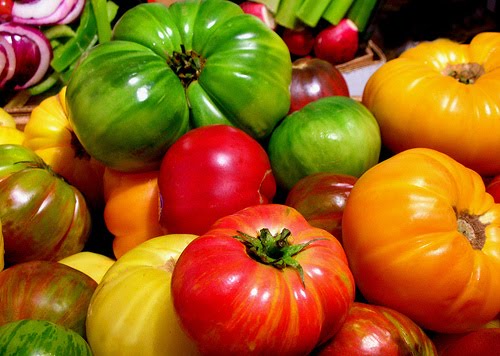
The Cadillac of tomatoes I’ve come to worship is the heirloom tomato. I reckon even a tomato-hater could eat a salted wedge of an heirloom and pronounce it delicious. I generally mistrust people that eat tomatoes like apples (or string cheese like hot dogs, for that matter) but the taste profile here is so much greater that I actually may acquiesce.


To be classified as heirloom, a plant must be “open pollinated” meaning its seeds will produce plants similar to the parent. While that sounds obvious, the truth is that many typical grocery store bought tomatoes are intentionally bred to be sterile so that consumers must continue to buy seeds every year. That means when you give little Jimmy down the street a tomato to plant and grow his own tomato vine, Jimmy is going to be sorely disappointed when it never comes to fruition. And likely buy his own hybridized tomatoes to throw at your house if he’s anything like the little Jimmy that lived on my street.


Heirloom seeds can be saved and passed around, and cannot be patented like hybrids and GMOs. Some have really awesome Indian names like Cherokee Purple or Fast Horse. Okay, fast horse was actually my Indian name in kindergarten. But Black Bear and Goliath are other actual varietal names.


Hotcha Hotcha, lookin good


You’ve probably seen these oddly shaped and colored beauties at the farmers market or seasonally in grocery stores. With their varying shapes and different washes and fades of color they look like works of art. I willingly admit to having photographed them to be my phone background. I will not as willingly admit to the altercation I got into when I overheard two women calling them ugly tomatoes at the farmers market, when clearly the only thing ugly was their ignorance of food politics.


This brings me to the reason to eat heirlooms aside from their superior flavor. By buying these tomatoes you help keep certain varietals in existence. There are heirloom tomatoes that date back to the Trail of Tears. The Trail of Tears!! Do you hear the frantic urgency here! You can be taking a bite out of history! Which metaphorically sounds a bit dustier and not as delicious as intended. It is important to keep these strains alive because our modified, hybridized tomatoes have not been around very long. They are all genetically similar. If an insect or disease evolved that affected these tomatoes, it could wipe out the entire crop. Heirlooms have survived the years being exposed to varying conditions and thereby developing different genetic makeups, so it is unlikely one disease would affect all of them.


Look kids it’s heaven! Or an heirloom tomato tasting.


There are other heirloom plants besides tomatoes. Some examples include certain beans, blue corn, and Forbidden rice (which is the crazy black rice that does actually get sold under that name).


We end this broadcast with…tomato fight!!!


Thank you SO much Jessica for educating and entertaining us! Please come back and guest blog again soon!